Obsolete by Choice: The Millennials Dropping Real Money to Ditch the Future
There's a particular kind of irony in watching someone pull out a smartphone to photograph their new typewriter. But spend five minutes on any corner of Instagram or TikTok dedicated to analog living, and you'll see it happen constantly. The hashtag. The golden-hour lighting. The vintage Olivetti sitting on a reclaimed wood desk like some kind of altar to a slower century. And underneath it all, a price tag that would make your grandmother — who actually used one of those things — choke on her coffee.
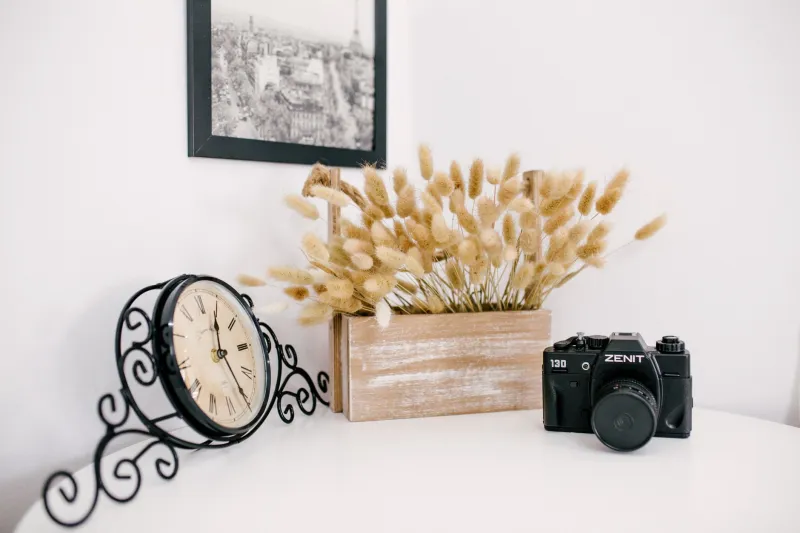
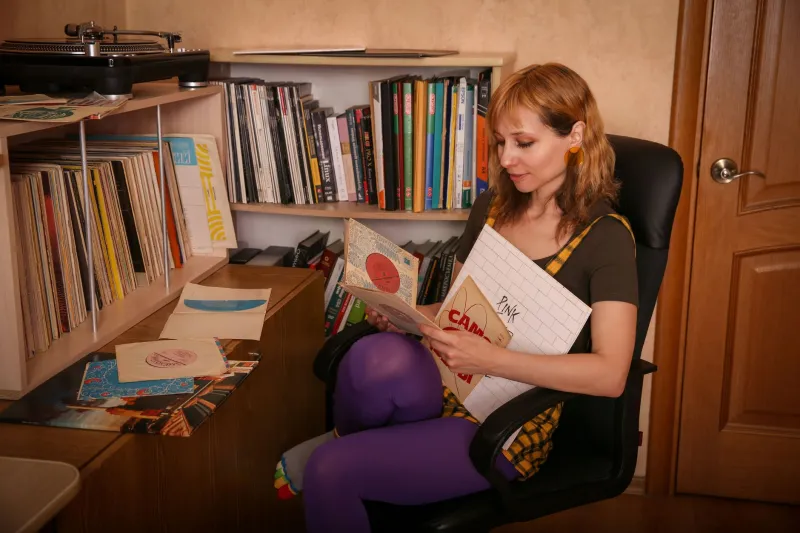
A fully restored Hermes 3000 typewriter will run you anywhere from $300 to $600. A decent entry-level film camera setup, once you factor in the cost of film and development, can easily top $400 before you've taken a single shot. A new mechanical watch from a mid-tier brand like Seiko or Hamilton? You're looking at $300 to $1,000, minimum. And vinyl? The Recording Industry Association of America reported that vinyl revenue surpassed CD revenue for the second consecutive year in 2023 — a format that was declared dead before most of its current buyers had finished middle school.
This isn't a niche hobby anymore. It's a market. And the people funding it aren't retirees chasing their youth — they're millennials in their late twenties and thirties who grew up with broadband internet, lived through the smartphone revolution, and are now consciously, deliberately, expensively choosing to opt out of pieces of it.
The question worth asking — the one that sits at the heart of this whole phenomenon — is why.
The Exhaustion Economy
To understand the analog revival, you have to understand what it's a reaction to. We are living through what some researchers are starting to call "decision fatigue capitalism" — an economic and cultural environment deliberately engineered to keep you in a state of perpetual, low-grade overwhelm. Every device you own wants your attention. Every app is optimized to manufacture urgency. Your watch doesn't just tell time; it monitors your heart rate, judges your sleep quality, and buzzes your wrist to remind you that you haven't stood up in the last hour.
Against that backdrop, a mechanical watch that does exactly one thing — tells you what time it is, beautifully, without requiring a charger — starts to feel less like a step backward and more like a small act of sanity.
"I got into mechanical watches right around the time I realized my Apple Watch was making me more anxious, not less," says Marcus, a 34-year-old UX designer based in Portland. "There's something genuinely calming about an object that just is what it is. It doesn't have notifications. It doesn't have updates. It doesn't have a subscription tier."
That last part matters more than it might seem. In an era when software companies have retrained consumers to expect ongoing fees for things they used to buy once and own forever, analog objects represent a fundamentally different economic relationship. You buy a film camera. You own a film camera. It doesn't require a monthly plan. It doesn't get bricked by a server shutdown. It doesn't quietly change its terms of service at 2 a.m. on a Tuesday.
Nostalgia or Something Sharper?
The easy narrative here is nostalgia — that millennials are romanticizing childhoods they half-remember, reaching for a tactile past to soothe a digital present. And sure, some of that is real. There's genuine emotional warmth in the crackle of a needle hitting vinyl, in the mechanical clunk of a typewriter key, in the grain of a photograph that took three weeks and twenty dollars to exist.
But calling this purely nostalgic undersells what's actually happening. A significant chunk of the people buying film cameras today were toddlers when digital photography went mainstream. They have no personal memory of a world where film was the default. They're not recapturing something lost — they're choosing something they never had in the first place. That's not nostalgia. That's a value statement.
And the values being expressed are pretty pointed. Slowness. Intentionality. Permanence. Craft. These are all things that the dominant logic of Silicon Valley — ship fast, iterate constantly, deprecate without ceremony — actively works against. When you shoot on film, you get 24 or 36 exposures per roll. You slow down. You think before you press the shutter. You accept that some shots won't work out, and you live with that. The algorithm doesn't get to optimize your composition in post.
"Film forces you to be present," says Deja, a 29-year-old photographer and barista in Chicago who shoots exclusively on a Canon AE-1 she bought secondhand for $180. "With digital, I'd take 200 photos of something and feel nothing. With film, I take 12 and actually care about every single one."
Status Symbol or Quiet Rebellion?
Here's the uncomfortable part of this story, though: analog isn't cheap, and that shapes who gets to participate in it.
The analog revival, for all its countercultural energy, has a distinct class dimension. The people who can afford to pay $25 for a roll of film, wait two weeks for development, and shell out $400 for a camera that lacks autofocus are, by definition, people with disposable income and disposable time. There's something worth sitting with in the fact that "opting out" of modern convenience is itself a luxury — one that requires the very financial stability that modern convenience was supposedly designed to create.
This doesn't make the impulse invalid. But it does complicate the rebellion narrative. A typewriter on a Brooklyn apartment shelf can be genuine creative practice or it can be aesthetic theater — and sometimes it's both simultaneously, which is a very millennial thing to be.
What the market data suggests, though, is that this is more than trend-chasing. Vinyl sales have grown for 17 consecutive years. Film photography communities on Reddit have doubled in membership since 2020. Watchmakers who specialize in mechanical movements are reporting multi-year waiting lists. These aren't the numbers of a passing aesthetic moment. They're the numbers of a structural shift in how a particular generation relates to its objects.
What We're Actually Buying
Maybe the most honest way to read the analog revival isn't as nostalgia or rebellion or status signaling — though it contains elements of all three — but as a search for a different kind of relationship with technology itself.
We've spent two decades being told that newer is better, that upgrading is mandatory, that last year's model is already embarrassing. The analog holdouts are, in their own quietly expensive way, pushing back on that premise. They're betting that an object with depth — with mechanical complexity, with physical warmth, with a finite lifespan that can actually be repaired — is worth more than an object that is merely new.
In a culture that treats obsolescence as a moral failing, choosing the obsolete thing is a small but legible act of defiance.
Whether it changes anything about the system is a different question. But at least the typewriter doesn't send you a notification asking how you feel about it.