Selling You Back Your Childhood: The Corporations Cashing In on Manufactured Memory
Let's start with a number: $199.99. That's what Analogue is currently charging for its Pocket, a handheld gaming device that plays original Game Boy cartridges. The original Game Boy, adjusted for inflation, cost about $130 in today's dollars. The Pocket does essentially the same thing — plays the same games, produces roughly the same level of fun — but it does it with a sharper screen and an aluminum shell and the unmistakable glow of intentionality. You're not just playing Tetris. You're making a statement.
This is the nostalgia industrial complex in its purest form: the systematic commodification of memory, dressed up as cultural rebellion and sold at a markup that would make a Supreme hoodie blush.
The Machine That Runs on Longing
Nostalgia has always been a market force. Oldies radio, VH1 retrospectives, the entire theatrical run of Top Gun: Maverick — none of this is new. What is new is the precision. Corporations have gotten extraordinarily good at identifying exactly which artifacts of the past carry the most emotional weight for specific demographic cohorts, and then reverse-engineering products designed to trigger that response on demand.
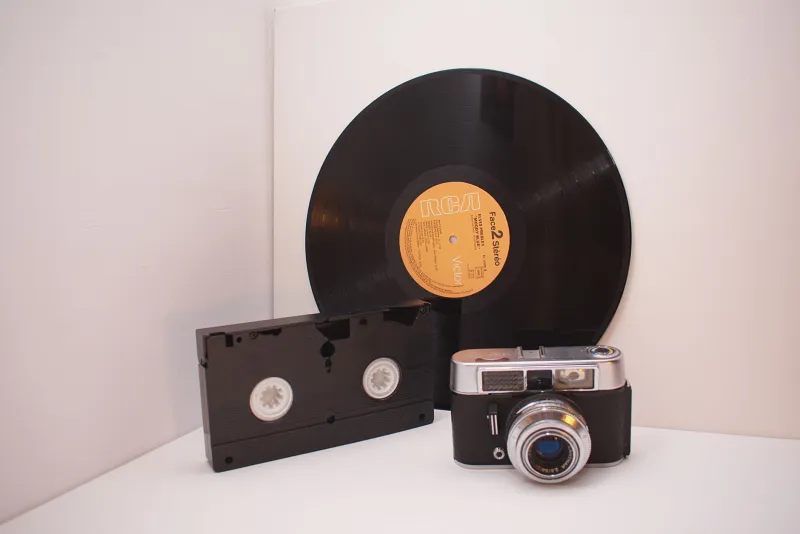
The vinyl resurgence is probably the clearest example. Record sales in the US hit $1.4 billion in 2023, outselling CDs for the second consecutive year. Taylor Swift's The Tortured Poets Department moved over 850,000 vinyl units in its debut week. But here's the uncomfortable truth nobody in the think-pieces wants to sit with: most people buying those records don't own a turntable that can adequately reproduce what vinyl is actually supposed to sound like. They're buying the object. They're buying the ritual. They're buying the version of themselves that exists in a world where music is something you hold.
That's not inherently bad. But it's also not resistance. It's consumption wearing a flannel shirt.
Limited Edition, Unlimited Cynicism
The limited-edition drop has become the nostalgia economy's primary delivery mechanism. Nintendo's NES Classic sold out in minutes and then sat on eBay for three times retail. Polaroid's Now camera line, Kodak's Ektachrome revival, the Motorola Razr reboot — all of them operate on the same fundamental logic: scarcity plus memory equals premium pricing, full stop.
What makes this particularly sharp is who's doing it. These aren't scrappy indie operations preserving dying crafts. Nintendo is a $50 billion company. Kodak's Ektachrome relaunch was a corporate decision made in a boardroom, not a darkroom. The aesthetic of authenticity — the grain, the weight, the deliberate inconvenience — is being manufactured at scale by the same entities that spent decades convincing us that digital was superior in every measurable way.
They weren't wrong about digital being superior. They're just also not wrong that you'll pay extra to pretend it isn't.
Is Any of This Real?
Here's where it gets complicated, because dismissing the whole thing as corporate manipulation misses something genuinely true about why people are reaching backward.
The products people are nostalgic for weren't just different — they were different in ways that mattered. A Game Boy had one job. A record demanded your attention for 22 minutes before you had to flip it. A disposable camera gave you 27 shots and zero previews, which meant you actually looked at what you were photographing before you pressed the button. These weren't design flaws. They were constraints that created presence, and presence is exactly what the algorithmic attention economy has systematically destroyed.
So when a 28-year-old in Portland drops $200 on a turntable setup, there's something real underneath the aesthetics. There's a genuine desire to interact with media that doesn't interact back, that doesn't track your listening habits and serve you a personalized playlist designed to keep you engaged for another 47 minutes. The impulse is legitimate. The corporations selling the solution to that impulse are just very, very good at spotting legitimate impulses and building a revenue stream around them.
The Authenticity Paradox
The cruelest irony of the nostalgia industrial complex is that the act of purchasing your way into authenticity undermines the thing you were reaching for in the first place. A first-edition pressing of Rumours that your parents actually bought in 1977 carries something a 2024 Fleetwood Mac anniversary repress simply cannot replicate — not because of audio fidelity, but because of context. The original object existed outside the market logic of nostalgia. The repress exists entirely within it.
This is the paradox that every think-piece about vinyl or film photography or analog gaming eventually runs into and then quietly sidesteps: you cannot purchase your way out of the system that's making you uncomfortable. Buying a $300 Fujifilm instant camera doesn't opt you out of consumer capitalism. It just redirects your participation toward a more photogenic corner of it.
Which isn't nothing, maybe. But it's also not the revolution the branding implies.
What Genuine Resistance Actually Looks Like
For the record — pun fully intended — there are people doing this differently. The folks buying actual vintage equipment at thrift stores and estate sales, repairing it themselves, building communities around the technical knowledge required to keep old formats alive. The archivists digitizing rare recordings not to sell them but to preserve them. The game preservation communities maintaining ROMs of titles that would otherwise be completely inaccessible.
These people exist, and they matter, and almost none of them are the target market for the nostalgia industrial complex. They're too inconvenient. They don't drive quarterly revenue. They can't be monetized through a limited-edition drop because they're specifically interested in the things that weren't manufactured for them.
The distinction is worth holding onto, especially as the nostalgia economy continues to expand and the products get sleeker and the marketing gets more sophisticated. The question to ask about any retro purchase isn't does this feel authentic — it's who benefits from me feeling that way.
The Bottom Line
The nostalgia industrial complex isn't going anywhere. If anything, it's accelerating, because the conditions that produce it — digital overwhelm, algorithmic alienation, the sense that the present is moving too fast and the future looks genuinely scary — aren't going anywhere either. Corporations will keep finding new artifacts to reissue, new memories to monetize, new ways to sell you the feeling of a world that moved at human speed.
None of which means you're a fool for buying the record or the camera or the handheld gaming device. It just means you should buy it with your eyes open, knowing exactly what transaction is actually taking place. You're not escaping the market. You're choosing a different product within it.
The childhood they're selling you back was never quite as simple as you remember. Neither is this.