You've Got Mail (But Someone Else Is Reading It): The Rise of the Professional Inbox Manager
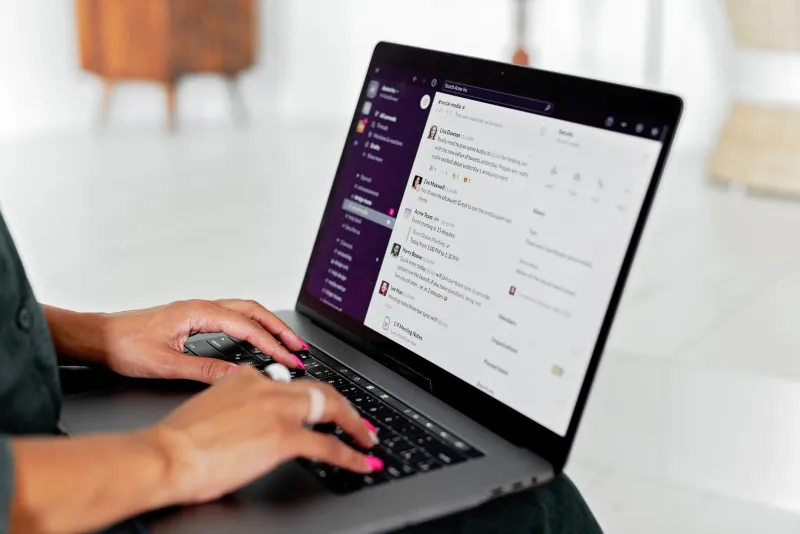
Kira J. has 47,000 unread emails. She knows this because her phone tells her, in a little red badge, every single morning. She stopped looking at the number as a metric around 2021. Now it's just ambient dread, a background hum of obligation she's learned to tune out the way you tune out a car alarm on a New York street.
"I'm not an irresponsible person," she's quick to say. "I run a small business. I'm organized. I just — email broke something in my brain and I can't fix it."
So she hired someone to fix it for her.
The Job That Inbox Zero Built
For the past eight months, a woman named Deja — who runs a small virtual assistant practice out of Charlotte, North Carolina — has been managing Kira's inbox. She reads the emails. She categorizes them. She drafts responses in Kira's voice, flags anything that genuinely needs Kira's attention, and archives the rest. Kira reviews a daily summary, approves the drafts, and hasn't opened her actual inbox since February.
"I felt guilty about it for maybe two weeks," Kira admits. "Then I just felt free."
Deja charges $600 a month for full inbox management. She has eleven clients. She's turning away new ones.
This is not a fringe phenomenon. Across freelance platforms, in Facebook groups for virtual assistants, in the growing stack of productivity newsletters that have replaced actual productivity, a new service category is quietly exploding: people who will, for a monthly fee, take email off your hands entirely. Not filter it. Not sort it. Actually read it, respond to it, and make it go away.
How We Got Here
To understand why this market exists, you have to understand what email became.
Email was supposed to be liberating. It replaced physical memos and expensive long-distance calls. It was asynchronous and efficient and democratic. For about a decade, it was genuinely great.
Then it became the infrastructure for everything. Marketing funnels. Customer service queues. Project management threads that should have been Slack messages that should have been a quick conversation. Automated receipts and shipping notifications and password reset confirmations and newsletters you signed up for in 2014 and forgot about. The average American office worker, according to research from McKinsey, spends roughly 28 percent of their workday on email. That's more than two hours a day, every day, doing something that mostly feels like administrative treading water.
And then the pandemic happened, and remote work happened, and suddenly email was also standing in for the hallway conversation, the quick desk check-in, the shoulder tap. The volume exploded. The psychological weight exploded with it.
Notification fatigue isn't a metaphor. Researchers studying digital communication overload have documented measurable increases in cortisol — the stress hormone — associated with email checking behavior. Your inbox isn't just annoying. It's physiologically stressful in a way that your brain was never designed to handle at this volume.
"Email was designed as a tool," says one UX researcher who studies digital communication patterns. "What it became is a social obligation system with no off switch. You're expected to be perpetually available to every person who has your address, for any reason, at any time. That's not a tool. That's a job."
The Workers Behind the Inboxes
The people doing this work occupy an interesting position in the gig economy. They're not quite executive assistants in the traditional sense — most of their clients aren't executives. They're small business owners, freelancers, therapists, real estate agents, content creators. People for whom email has become a genuine bottleneck but who don't have the infrastructure of a corporate office.
Deja got into inbox management after years of broader virtual assistant work. "I realized email was the thing everyone dreaded most," she says. "They'd handle everything else themselves but just completely avoid their inbox. So I started specializing."
The work requires a specific skill set that's harder to define than it sounds. Reading someone's email means reading their life — their client relationships, their financial situation, their personal anxieties. Responding in their voice means developing a kind of ghostwriting fluency. A good inbox manager has to be part editor, part therapist, part business analyst.
The pay varies enormously. Entry-level inbox support — basic sorting and flagging — might run $15 to $20 an hour on a platform like Upwork. Full-service management with response drafting, for a client with complex communication needs, can command $75 to $100 an hour for experienced operators. Some have moved to monthly retainers that run well into four figures.
The Intimacy Problem
Not everyone is comfortable with this arrangement, and the discomfort is worth taking seriously.
Handling someone's email means accessing information that most people would consider deeply private. Business negotiations. Medical correspondence. Family drama. The kind of stuff that lives in an inbox is, in aggregate, a fairly complete picture of a person's interior life.
Most inbox managers operate on informal trust rather than formal NDAs. Some clients are meticulous about setting up separate email addresses for their managers to handle, keeping personal correspondence off the table. Others hand over full access to everything and just hope for the best.
"I know things about my clients that their spouses probably don't know," Deja says, not unkindly. "I try to be a vault. That's part of the job."
There's also a class dimension here that deserves acknowledgment. The ability to pay someone else to handle your communication overhead is, by definition, a luxury. The people doing the outsourcing are purchasing time and attention with money. The people doing the managing are, in many cases, handling the communication anxiety of someone wealthier than they are, often without benefits or job security.
What We're Really Paying For
Here's the thing about this trend that keeps nagging at me: email isn't actually broken. The technology works fine. What's broken is the social contract that grew up around it — the implicit agreement that receiving a message creates an obligation to respond to it, quickly, at any hour, from any device, forever.
Hiring someone to manage your inbox isn't fixing that contract. It's paying to opt out of it while leaving it intact for everyone else. Your inbox manager still has to honor the obligation on your behalf. The system still runs on the assumption of perpetual availability.
Maybe that's fine. Maybe individual solutions to collective problems are the only solutions available in the world we actually live in. But there's something quietly melancholy about the fact that one of the most basic acts of digital communication — reading a message, writing back — has become so psychologically taxing that we've built an entire service industry around doing it for people who can afford to delegate it.
Kira's 47,000 unread emails are still there. Deja isn't touching those — that's the old backlog, the archaeological layer. But the new ones? Those are handled. Kira's phone still shows the badge number every morning.
She just doesn't look at it anymore.