Artifacts of the Discontinued: The Millennials Turning Dead Products Into Living Archives
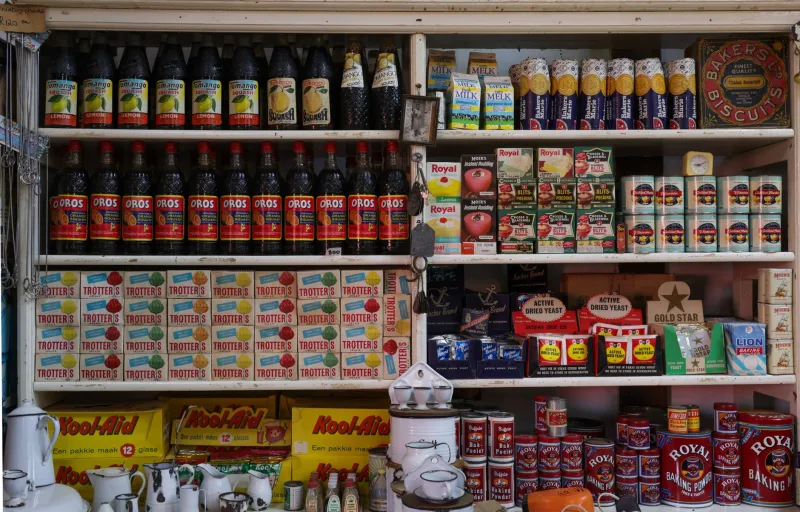
Artifacts of the Discontinued: The Millennials Turning Dead Products Into Personal Archives
Somewhere in a climate-controlled storage unit in Tempe, Arizona, there are seventeen sealed boxes of Surge soda, two mint-condition Zune media players still in their original packaging, and a complete run of merchandise from Firefly—the show Fox cancelled after one season and the internet has been mourning ever since. The person who owns all of this is a 34-year-old UX designer named Marcus. He doesn't think of himself as a hoarder. He thinks of himself as a curator.
"Everything I have in there," he told us, "got erased. Not because it was bad. Because someone with a spreadsheet decided it wasn't profitable anymore. I'm just keeping the record."
This is the Great Rewind—a loose, largely unorganized cultural movement of millennials who are quietly building personal museums out of the consumer wreckage of the last three decades. And it's bigger, stranger, and more economically significant than anyone in Silicon Valley wants to admit.
Not Nostalgia. Something Harder.
Let's get one thing straight: this isn't your grandmother saving Beanie Babies in a plastic tub. The collectors driving this trend are deliberate. They research. They network. They spend real money—sometimes alarming amounts of it—to acquire objects that the market officially considers dead.
A sealed box of Crystal Pepsi recently moved on eBay for $340. A functioning Sony AIBO robot dog from the early 2000s can fetch upward of $2,000 in working condition. First-generation Amazon Echo units—discontinued in 2021—are already showing up in collector communities with price tags that would make your eyes water.
But ask these collectors why they do it, and very few of them reach for the word "nostalgia." That word implies passivity, a soft ache for something lost. What they describe is more active. More political, even.
"Nostalgia is about feeling," says Dani, a 31-year-old librarian in Portland who maintains what she calls her "discontinuation archive"—a rotating display of products pulled from shelves, cancelled without warning, or quietly sunset by corporations that never bothered to explain themselves. "What I'm doing is about memory. About saying: this existed, it mattered to people, and I'm not going to let the algorithm decide it never happened."
The Economics of Impermanence
Here's what makes this more than a quirky hobby profile: there's a genuine, growing economy built around it.
Resale platforms like eBay, Mercari, and niche sites like Hoarderverse have seen double-digit growth in categories specifically tagged as "discontinued" or "vintage consumer goods" over the past three years. Storage rental companies in major metros report that a measurable percentage of their new customers cite collecting as their primary use case. Facebook groups dedicated to specific discontinued products routinely hit tens of thousands of members.
And then there are the sellers—a cottage industry of people who've turned discontinuation arbitrage into a side hustle, or in some cases a primary income. They haunt grocery store clearance aisles, liquidation warehouses, and estate sales, buying discontinued products in bulk and reselling them at multiples to collectors who missed the window.
The margins are real. A case of Planters Cheez Balls—discontinued in 2006, briefly revived in 2018, then discontinued again—can sell for two to three times its original retail price years after the last unit left a warehouse. Certain flavors of discontinued Gatorade are now treated like fine wine, with provenance and condition mattering enormously to serious buyers.
What Gets Saved, and Who Decides
One of the more uncomfortable threads running through this community is the question of canon. Not everything gets preserved equally. The objects that attract the most passionate collectors tend to reflect the cultural demographics of millennials themselves—which is to say, largely white, largely middle-class, and heavily skewed toward the pop culture touchstones of the 1990s and early 2000s.
Marcus acknowledges this directly. "There's a whole world of discontinued products from Black-owned brands, from Latino grocery chains, from regional companies that nobody in these collector communities is even thinking about," he says. "If we're really talking about preservation, that's the stuff that's actually disappearing without a trace."
Some collectors are actively trying to correct this. Community archivists in cities like Chicago, Houston, and Atlanta are documenting discontinued regional products—corner store staples, neighborhood bakery items, local soda brands—that never had the cultural footprint to generate a Reddit thread, let alone a resale market. It's slower work, less glamorous, and it rarely produces objects worth hundreds of dollars. But it's arguably more important.
The Digital Void That Made This Necessary
There's a reason this movement is happening now, and it's not accidental. We live in an era of aggressive impermanence. Streaming platforms delete entire shows from their libraries without warning. Apps vanish overnight. Brands that existed for decades get absorbed and quietly killed by private equity. Even websites—entire archives of human thought and creativity—disappear when someone forgets to renew a domain.
The digital world promised permanence and delivered the opposite. The cloud turned out to be a rental agreement with no guaranteed term. And millennials, who grew up being told that everything would be available forever, have absorbed that betrayal in ways that are only now becoming legible.
Collecting physical objects—objects that exist in space, that can't be patched away or server-sunset or quietly removed from a library—is a response to that. It's a hedge against the specific kind of erasure that the digital age specializes in.
"A company can delete a streaming show in a Tuesday afternoon meeting," Dani says. "They can't delete my shelf."
The Personal Museum as Protest
Call it what it is: a small, stubborn act of resistance. Not a revolution, not a manifesto—just a room full of things that someone decided mattered enough to keep, against the explicit preference of the market.
The corporations that discontinued these products didn't consult anyone. They ran the numbers, held the meetings, and made the call. The collectors running counter to that logic are doing something quietly radical: asserting that the value of an object isn't determined solely by its profitability, and that the people who loved something get a vote in whether it survives.
In a world where the algorithm curates your memories, your entertainment, and increasingly your sense of self, the personal museum is a declaration of editorial independence. It says: I decide what's worth remembering. Not the platform. Not the brand. Me.
Marcus has started cataloguing his collection—photographing each item, writing up a short history, noting where and when it was discontinued and why. He's not sure what he'll do with it eventually. Maybe donate it to a local history museum. Maybe just leave it for whoever comes after him.
"Someone has to keep the receipts," he says. "Might as well be us."