The End Is Always Trending: How Millennials Learned to Binge the Apocalypse
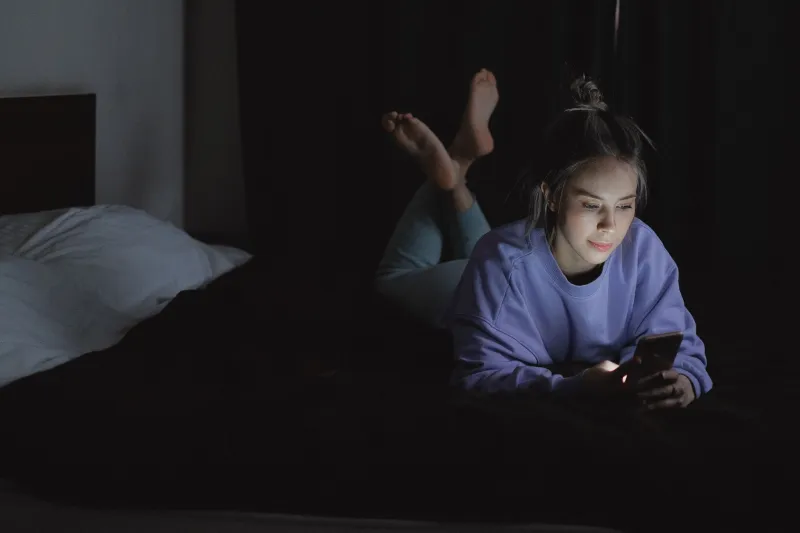
There's a specific kind of person who wakes up at 6:47 a.m., reaches for their phone before their feet hit the floor, and spends the next twenty minutes reading about glacial collapse, AI governance failures, and the latest Congressional dysfunction — then gets up, makes coffee, and goes to work. That person is probably a millennial. And they are not alone.
Something strange has happened to the way a generation processes catastrophe. Bad news used to feel like an interruption. Now it feels like the main event. The apocalypse, it turns out, has excellent pacing.
When Dystopia Became a Genre You Could Follow
Think about how we talk about the news cycle now. We use the language of serialized fiction — episodes, arcs, plot twists. The latest climate report drops like a season finale. A geopolitical crisis unfolds in real time like a thriller with no author and no guaranteed resolution. We track it. We share it. We theorize about what comes next.
For millennials — a generation that grew up on The Road, Children of Men, and WALL-E before the algorithms even knew what to serve them — the aesthetic of civilizational decline is practically native. These weren't fringe texts. They were blockbusters. They were assigned reading. The bleakness was the point, and somewhere along the way, real life started to rhyme.
Now the line between speculative fiction and Tuesday's headlines has gotten genuinely thin. Wildfire smoke turning the sky orange over San Francisco. A debt ceiling standoff that plays out like a hostage negotiation. A pandemic that came with its own variants and sequels. If you'd pitched any of this as a screenplay ten years ago, someone would have told you to dial it back.
The Comfort of a Legible Catastrophe
Here's the counterintuitive thing about doom content: it's reassuring. Not because it offers hope — it often doesn't — but because it offers structure. A catastrophe you can name and map is a catastrophe you can, at least theoretically, prepare for. And preparation, even purely cognitive preparation, feels like agency.
Psychologists have a term adjacent to this: worry as problem-solving. The idea that the anxious mind convinces itself that thinking hard enough about a threat is the same as doing something about it. Doomscrolling operates on the same logic. If you've read every article about water scarcity in the American Southwest, you feel, on some level, like you've done your homework. Like you'll be ready.
Ready for what, exactly, is never quite specified.
But the alternative — accepting that the future is genuinely unpredictable and that no amount of catastrophe content will give you a heads-up — is somehow worse. Uncertainty without narrative is just dread. Uncertainty with narrative is at least a story you're following.
The Algorithm Knows You Like It Dark
Of course, none of this happens in a vacuum. The platforms that deliver doom content are not neutral pipes. They are finely tuned engagement machines, and they have noticed — because they always notice — that catastrophic content performs. Fear and outrage keep people scrolling longer than contentment does. It's not a conspiracy. It's just math.
So the feed learns. It serves you the climate graph, then the response thread, then the counter-argument, then the dunking on the counter-argument. It gives you a community of fellow catastrophists to follow, people who speak your dialect of dread. It makes the apocalypse social.
And that's where it gets genuinely complicated. Because there is something valuable in a generation that takes existential risk seriously. Climate anxiety isn't irrational — the climate is actually changing. Democratic backsliding isn't paranoia — political scientists are writing peer-reviewed papers about it. The news isn't fake. The doom is, in many cases, real.
The question isn't whether the bad stuff is happening. It's whether consuming it in an infinite loop is doing anything useful — for your mental state, for your politics, for your actual behavior in the world.
Escapism in Reverse
Here's a theory worth sitting with: maybe apocalyptic content isn't escapism in the traditional sense. Traditional escapism takes you away from your problems — into fantasy, into romance, into a world where the stakes are fictional. Doom content does something different. It takes the diffuse, unnameable anxiety of modern life and gives it a setting. A villain. A timeline.
In that sense, it functions less like escapism and more like worldbuilding. You're not running from the present — you're constructing an imagined future that makes the present feel coherent. Even if that future is terrible, it has the satisfying quality of making sense. The chaos has a shape.
This might be why so many millennials report feeling weirdly calm after a deep dive into climate collapse content or a long thread about geopolitical risk. It's not that the information is comforting. It's that having a story — even a grim one — is more tolerable than having noise.
So What Do We Do With That
There's no clean takeaway here, and anyone selling you one is probably trying to get you to buy a prepper subscription box or a mindfulness app. The truth is messier.
Consuming catastrophe content is probably fine, in the way that most things are fine in moderation and corrosive at scale. The problem isn't that millennials are reading about the end of the world. The problem is that the systems delivering that content are optimized for volume, not for the kind of slow, contextual understanding that might actually translate into useful action.
There's a version of engaging with doom that moves somewhere — that turns anxiety into organizing, or informed voting, or even just honest conversation about what kind of future we're actually building. And there's a version that just loops. That serves the algorithm and leaves you exactly where you started, only more tired.
The apocalypse is a great story. It always has been. The question is whether you're reading it or living it — and whether, somewhere in the middle of the scroll, you can still tell the difference.
Zero Century covers the futures we're actually heading toward, not the ones we were promised. Make of that what you will.