Offline by Design: The Booming Business of Selling Millennials a Room the Internet Can't Find
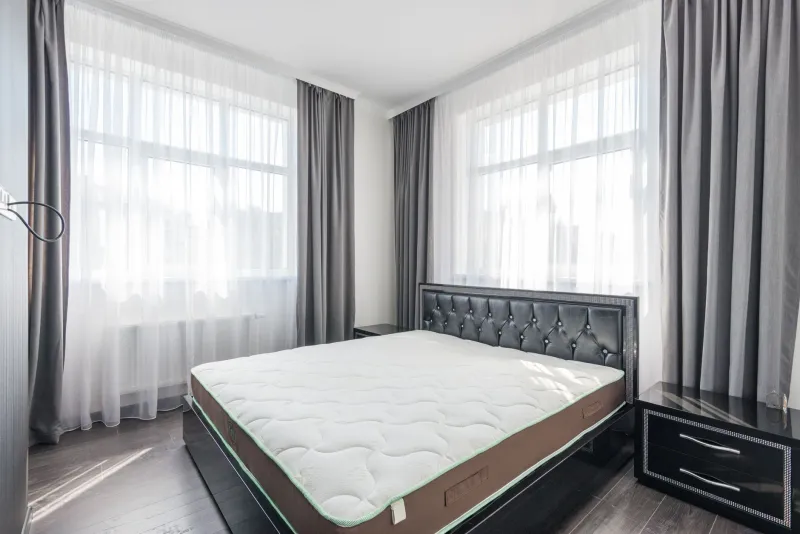
Somewhere in a renovated craftsman bungalow in East Nashville, there is a bedroom that does not exist — at least not to any network. The walls are lined with a nickel-copper fabric that blocks Wi-Fi, Bluetooth, cellular signals, and GPS. The window has a film on it that looks like frosted glass but functions more like a steel vault. The owner, a 34-year-old UX designer named Marcus, paid somewhere north of $4,000 to make this happen. He sleeps better than he has in years.
"I don't think I'm paranoid," he told me over a phone call — taken, notably, from the front porch. "I just wanted one place in my life where nothing was listening."
Welcome to the silence premium.
What Faraday Cages Have to Do With Millennial Anxiety
For the uninitiated: a Faraday cage is an enclosure built from conductive material that blocks electromagnetic fields. Michael Faraday invented the concept in 1836. For most of history, it was a laboratory curiosity. Today, it's a home renovation category.
Companies like DefenderShield, Mission Darkness, and a growing roster of boutique EMF shielding contractors are doing brisk business selling signal-blocking paint, RF-reflective wallpaper, grounded bed canopies, and full-room conversion kits to a customer base that skews heavily millennial, college-educated, and — perhaps surprisingly — employed in tech. The same demographic that built the connected world is now paying premium prices to carve out corners of their lives where it can't reach them.
Search volume for terms like "EMF shielding bedroom," "Faraday room DIY," and "signal blocking home" has climbed steadily since 2020, spiking noticeably in the months following major data breach news cycles and high-profile revelations about smart device data collection. The market research firm Grand View Research projected the global EMF shielding market at over $6 billion in 2022, with residential applications among the fastest-growing segments.
That's not a fringe number. That's an industry.
The Fear Is Real, Even If the Solutions Are Complicated
Here's where this gets thorny, because the concerns driving this market aren't entirely irrational. Smart speakers have been caught recording conversations they weren't supposed to. Smartphones track location data even when location services are toggled off. Smart TVs have been documented harvesting viewing habits and selling that data to third-party advertisers. Your router knows your sleep schedule. Your thermostat knows when you're home.
Data broker companies — largely unregulated in most U.S. states — aggregate this information into profiles so detailed they can predict health conditions, financial stress, and relationship status with uncomfortable accuracy. The Federal Trade Commission has been sounding alarms about this ecosystem for years, but meaningful federal privacy legislation has stalled repeatedly in Congress. In the absence of legal protection, some people are building physical ones.
Security researchers will tell you that a well-constructed RF-shielded room genuinely does what it claims. No signal in means no signal out. Your devices can't phone home if there's no signal to ride. That part is real.
What's murkier is the broader EMF health anxiety that often gets bundled into the same marketing conversation — the suggestion that non-ionizing radiation from Wi-Fi routers and cell towers poses direct biological harm. The scientific consensus doesn't support that claim at current exposure levels. But the industry is savvy enough to blur the line between legitimate data privacy concerns and more speculative health fears, because together they sell a lot of copper-lined curtains.
When Security Theater Becomes Interior Design
What's fascinating — and a little heartbreaking — about this trend is how thoroughly it's been aestheticized. This isn't just about tin foil and panic rooms. The new wave of signal-blocking products is designed to look good. Muted linen-colored RF-blocking fabric. Architecturally considered grounded canopies that photograph beautifully for Instagram. Paint that goes on like any other paint, indistinguishable to a guest, devastating to a Bluetooth signal.
The product photography on these sites looks like a West Elm catalog if West Elm had a quietly militant data-privacy politics. And that's intentional. The pitch isn't survivalist. It's aspirational.
Several interior designers in major U.S. cities have started offering "digital detox room" packages as a premium service, incorporating shielding materials alongside analog-only design principles — no smart lighting, no voice-controlled anything, physical switches only. In San Francisco and New York, these packages run between $8,000 and $25,000 depending on room size and material quality. There is reportedly a waiting list.
This is what happens when anxiety becomes a design brief.
The Psychological Logic of the Dead Zone
Speak to the people who've done this — and there are more of them than you'd expect — and a consistent theme emerges that has less to do with specific technical threats and more to do with something harder to quantify: the feeling of being watched.
Millennials grew up watching the internet transform from a destination you visited into an atmosphere you inhabit. The transition happened gradually, then all at once, and somewhere along the way the sensation of privacy — genuine, unmonitored privacy — became a memory rather than a default. The shielded room isn't just about blocking data extraction. It's about recovering a feeling. The feeling that your thoughts, your sleep, your intimate conversations aren't being catalogued somewhere in a server farm in Virginia.
That feeling, it turns out, is worth thousands of dollars to a meaningful number of people. Which tells you something devastating about what we've collectively agreed to give up in exchange for the convenience of asking a cylinder in our kitchen what the weather is.
Paying for What Used to Be Free
There's a grim irony at the center of all this. Privacy — the kind that simply existed as a byproduct of living your life before the network swallowed everything — has been converted into a luxury product. You can buy it back, if you have the money. A grounded bed canopy starts around $200. A full-room conversion with professional installation can hit five figures. The silence premium is real, and like most premiums in America, it's priced out of reach for the people who arguably need it most.
Marcus, the UX designer in Nashville, knows this. He's not naive about it. "I work in tech," he said. "I helped build systems that do exactly what I'm trying to hide from. I'm aware of how that sounds."
It sounds like the defining condition of our particular moment in history: knowing exactly how the machine works, having helped build it, and still not being able to stop it — except by lining your bedroom walls with copper and calling that freedom.
The future is everywhere now. Some people are paying a lot of money to make sure it can't find them while they sleep.