Ghost Code: The Underground Market Keeping Dead Software Alive
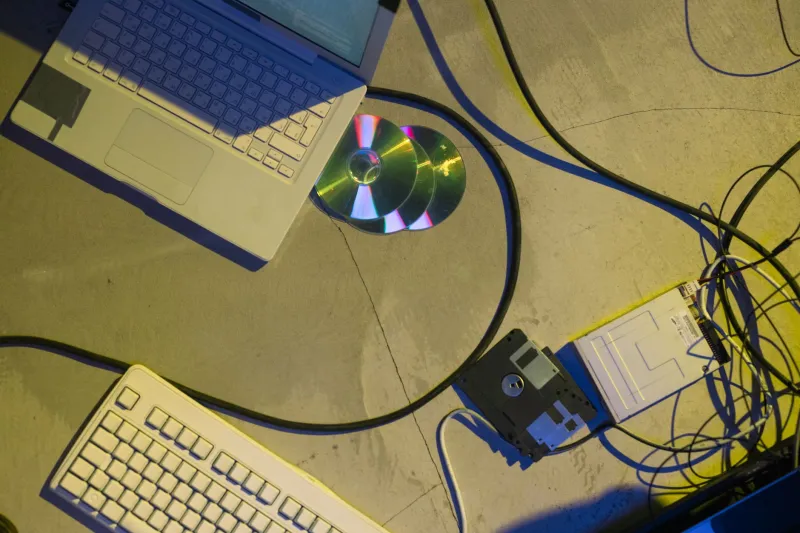
There's a Discord server you've probably never heard of where people trade zip files the way other communities trade vintage sneakers. The files in question aren't particularly glamorous to look at — folders of .dll extensions, readme documents last updated in 2003, install wizards that assume you're running Windows XP. But to the people swapping them, they might as well be gold bars.
Welcome to the underground economy of dead code.
The Archaeology of Abandoned Software
It started, like most weird internet subcultures, out of necessity. A developer somewhere needed a library that a defunct company had quietly sunset. A hobbyist wanted to run a piece of creative software that Adobe had absorbed and then quietly killed. A game modder needed access to proprietary tools that a studio had abandoned after bankruptcy.
They couldn't buy it. They couldn't download it. It simply existed nowhere — legally, at least.
So they started digging.
The community has a name for what they do: software archaeology. It involves trawling through archive.org's Wayback Machine, tracking down former employees on LinkedIn, cold-emailing retired engineers, and occasionally paying for hard drives that someone's grandmother left in a storage unit in Scottsdale. The goal is simple: find code that the industry decided wasn't worth keeping and prove the industry wrong.
"People think software is this permanent, infinitely copyable thing," says one archivist who goes by the handle Ferrite online and asked not to be identified by his real name. "But companies delete repositories all the time. They let domain registrations lapse. A SaaS product shuts down and takes fifteen years of user data with it. The idea that digital means forever is completely backwards."
What's Actually Being Traded
The market segments into a few distinct categories, and the prices vary wildly.
At the lower end, you've got compiled binaries — old executables that someone ripped from a physical install disc and uploaded. These move for anywhere from nothing (if someone's generous) to a few hundred dollars if the software is rare enough. A working install of a discontinued video editing suite from the early 2000s might fetch $150 on certain forums. A pre-acquisition version of a productivity app — before the company that bought it gutted the interface and moved everything to a subscription model — can go for more.
Higher up the chain are source code repositories. These are the crown jewels. When a company collapses, sometimes a developer walks out with a local copy of the codebase. Sometimes it surfaces years later. Sometimes it gets quietly offered to the right people at the right price. Full source for a niche CAD application that a mid-sized manufacturer relied on for a decade? That's a five-figure conversation.
Then there are the APIs. Dead APIs are their own particular tragedy — services that once let developers build entire ecosystems on top of them, then got shut down with 30 days notice and a blog post nobody read. Collectors of these aren't just preserving them for nostalgia. They're rebuilding them. Running local instances. Keeping alive the apps that depended on them.
"There are apps on my phone right now that technically shouldn't work," one developer told me. "They connect to servers I'm running in my basement that are spoofing endpoints that haven't officially existed since 2019. It's absurd. But the app is better than anything that replaced it, so here we are."
The Legal Gray Zone Is the Size of a Warehouse
Nobody involved in this scene pretends the legal landscape is clean. Intellectual property doesn't disappear when a company does. If a studio gets acquired, the acquirer inherits the IP. If a startup dissolves, those assets can end up in bankruptcy proceedings, in the hands of creditors, or in a legal limbo that nobody has the budget to litigate.
What that means in practice is that a lot of this activity exists in a space where enforcement is theoretically possible but practically unlikely. Nobody is coming after the guy running a private server for a defunct MMO. Nobody is filing a DMCA takedown against an archive of a web design tool that hasn't been sold since 2007.
But "unlikely" isn't "impossible," and the community knows it. Most serious collectors operate pseudonymously. Transactions happen through intermediaries. Code gets passed through encrypted channels. It has the texture of something illicit even when the moral case for preservation feels completely obvious.
"I'm not pirating software someone is actively selling," Ferrite says. "I'm keeping alive something that everyone with the legal right to it has chosen to abandon. There should be a word for that other than theft."
Why It Matters More Than It Looks
You could write this off as nostalgia for nostalgia's sake — nerds keeping old stuff running because they're emotionally attached to it. And sure, some of that is happening. But the deeper current running through this community is something more urgent.
We are living through an era of aggressive digital obsolescence. Software companies have discovered that subscriptions beat perpetual licenses, that cloud dependency beats local installation, that locking users into ecosystems beats giving them ownership. The result is a generation of people who have paid for software they can no longer access, built workflows around tools that no longer exist, and watched years of creative work become unreadable because the application that created it is gone.
The collectors of dead code are, in a weird way, building the library that the industry refused to build. They're the ones asking the question that platforms would rather you didn't think about: what happens to everything you made when the service decides it's done?
The answer, right now, is that it mostly disappears. Unless someone in a Discord server somewhere has a zip file and is willing to share it.
In the zero century — this strange era where everything is technically digital and nothing is guaranteed to last — that person might be the most important archivist in the room.