Ghost Towns in the Cloud: How Silicon Valley Keeps Building Digital Cities Nobody Wants to Live In
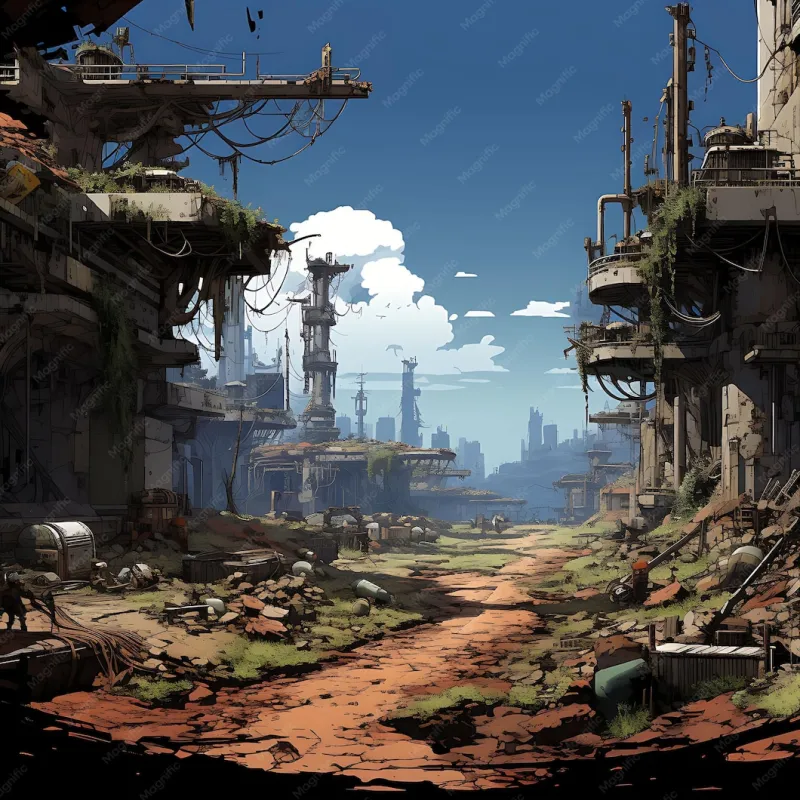
Photo: abandoned virtual reality world empty digital landscape futuristic ghost town, via img.freepik.com
There's a specific kind of silence that haunts a dead platform. It's not the silence of something that never existed — it's the silence of something that was supposed to change everything, that had a Super Bowl ad, a celebrity endorsement deal, maybe a think-piece in The Atlantic about how it would reshape human civilization. And then, nothing. Just empty servers humming in a data center somewhere, keeping the lights on for a world nobody chose to live in.
Welcome to the metaverse graveyard. Pull up a chair — there's plenty of room, because almost nobody else showed up.
The Billion-Dollar Field of Dreams Problem
When Mark Zuckerberg renamed Facebook to Meta in October 2021, it felt like the starting gun of a new era. The pitch was seductive in that particular Silicon Valley way: immersive virtual spaces, digital avatars, a persistent online world where you'd work, socialize, go to concerts, maybe buy virtual real estate. The company reportedly burned through somewhere north of $36 billion in its Reality Labs division over the following years chasing that vision. The result? Horizon Worlds, a platform that looked like it was designed by someone who had only heard about video games secondhand, populated by legless cartoon avatars shuffling through near-empty rooms.
At its peak, internal Meta documents reportedly showed that most users who tried Horizon Worlds never came back after the first month. The median experience was apparently closer to wandering through a deserted mall at 2 a.m. than anything resembling a vibrant digital civilization.
But here's the thing — Meta isn't alone in this graveyard. They're just the most expensive resident.
Second Life launched in 2003 with breathless predictions about becoming the internet's next frontier. Reuters opened a virtual bureau there. IBM held corporate meetings in it. And then, almost as quickly as the hype arrived, it evaporated — leaving behind a strange, persistent world that still technically exists, populated mostly by dedicated hobbyists and the occasional journalist writing a piece exactly like this one.
Google launched Google+ in 2011, Stadia in 2019, and various other platforms that arrived like thunderclaps and faded like smoke. Each one carried the implicit promise that this time the company had cracked the code of how humans actually want to connect and interact. Each time, the humans disagreed.
What the Hype Cycle Gets Wrong About Human Behavior
The pattern here isn't a bug — it's a feature of how the tech industry thinks about the future. There's a fundamental assumption baked into most of these platforms: that if you build a sufficiently impressive technological space, people will naturally migrate their social lives into it. Build the rails, and the passengers will come.
But social behavior doesn't work like infrastructure. People don't move their friendships, their routines, their emotional lives somewhere new just because the new place has better rendering. They go where their people already are. And getting a critical mass of people to simultaneously abandon their existing social graphs for a new platform requires either a genuine generational shift — think teenagers discovering TikTok — or a coercive network effect so powerful it leaves no real choice.
The metaverse, as envisioned by Meta and its competitors, required both the technological infrastructure and the social migration to happen at the same time. That's not a product launch. That's asking people to move to a city that doesn't have any of their friends in it, on the promise that their friends will probably move there too eventually.
Spoiler: your friends did not move there.
Roblox and the Exception That Proves the Rule
To be fair, not every virtual world is a ghost town. Roblox genuinely works — it has tens of millions of daily active users, a robust economy, and a generation of kids who've grown up treating it as naturally as their parents treated cable TV. But Roblox's success reveals something important about what the other platforms got wrong.
Roblox didn't sell people a vision of the future. It gave children a place to play, build, and socialize right now, with low barriers to entry and an organic creative economy that grew from the bottom up. It wasn't a top-down architectural vision of what human digital life should look like. It was a sandbox that people filled with their own meaning.
The metaverse projects that failed were largely the opposite: elaborate stages with no actors, grand theaters built before anyone had written the plays.
The Colonizer Mindset of Digital Futures
There's something worth sitting with here, something a little uncomfortable. The tech industry's approach to building virtual worlds has often carried the same energy as a real estate developer showing up to a neighborhood and announcing that they're going to make it great. The assumption is that the people who live there — or who will live there — will be grateful for the vision imposed on them.
But people aren't grateful for visions. They're grateful for things that actually solve problems they have, in ways that fit how they already live. The metaverse, as imagined by a boardroom full of engineers and venture capitalists, solved problems that most people didn't know they had — or didn't have at all.
Meanwhile, the actual digital spaces people chose to inhabit — Discord servers, group chats, subreddits, niche corner communities on every platform — kept humming along. Messy, unoptimized, sometimes chaotic. But alive.
What the Graveyard Teaches Us
Every failed platform is a time capsule of someone's prediction about human desire. Walking through the metaverse graveyard, you're really walking through a museum of futures that never arrived — not because the technology failed, but because the technology was solving for the wrong version of humanity.
The industry will keep building. The next wave of spatial computing promises, Apple Vision Pro included, are already arriving with their own freight of revolutionary rhetoric. And maybe something will stick. Maybe the combination of better hardware, more intuitive design, and a generation that's grown up digital will finally produce the persistent virtual world that tech has been promising since the nineties.
Or maybe the lesson is simpler and harder to swallow: people don't want to live in someone else's vision of the future. They want tools that make their actual present a little more bearable.
The cloud has plenty of room for more ghost towns. Silicon Valley will keep building them. And the rest of us will keep not moving in — choosing instead to stay in the messy, imperfect, stubbornly human spaces we already call home.