Curators of the Self: How Millennials Turned Their Apartments Into Shrines to Everything the Algorithm Can't Touch
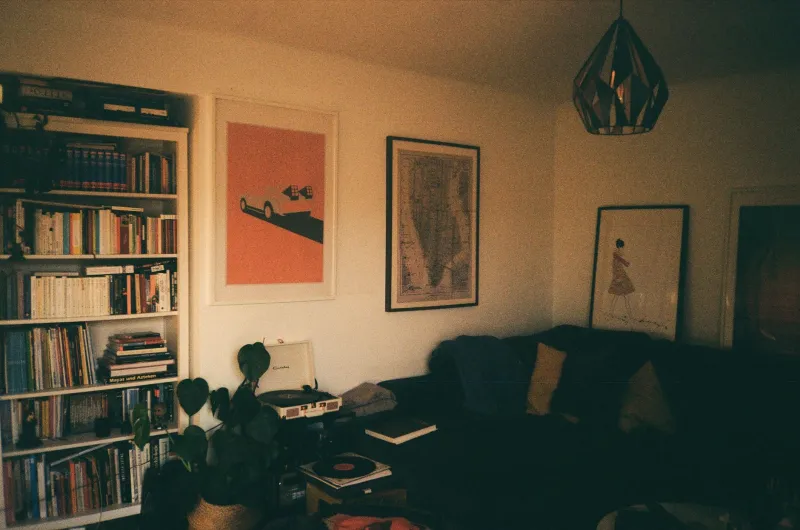
Walk into Dani Reyes's apartment in Denver and the first thing you notice isn't the furniture. It's the wall. Floor-to-ceiling shelving, packed with DVD box sets, original-pressing vinyl, a row of Funko Pops still in their boxes, a Buffy the Vampire Slayer promotional standee, and what appears to be every issue of a particular indie comic run from 2003. There's a logic to it, she'll tell you — a curatorial logic, actually — even if it looks like organized chaos from the outside.
"Spotify doesn't know what this means to me," she says, gesturing at a copy of a mid-2000s emo album with a cracked jewel case. "It can't. It just knows I played it."
Dani is 34. She is not unusual.
Across the country, millennials are doing something that looks, on the surface, like hoarding, but functions more like archiving. They're building personal museums inside their own homes — deliberate, emotionally loaded collections of physical objects that document who they are, where they came from, and what they refuse to let the cloud decide for them.
The Backlash Nobody Saw Coming
For a solid decade, the cultural consensus was that ownership was over. Why buy a DVD when you could stream? Why keep a bookshelf when you had a Kindle? The tech industry sold frictionlessness as the highest possible virtue, and for a while, we bought it — literally and figuratively.
Then the libraries started disappearing.
Netflix pulled titles. Spotify buried deep cuts under algorithmic pop. Digital storefronts quietly de-listed games people had "purchased." The promise of infinite access turned out to be infinite access until further notice, subject to licensing agreements, corporate mergers, and quarterly earnings calls. Suddenly, the people who'd kept their physical media looked less like luddites and more like preppers who'd been right all along.
But the personal museum trend isn't purely defensive. That's what makes it interesting. It's not just about backup copies. It's about meaning.
What Algorithms Can't Curate
Here's what a recommendation engine is genuinely terrible at: understanding why a specific object matters to a specific person at a specific moment in their life. Spotify can tell you that you listened to a song 47 times in 2009. It cannot tell you that you played it on a burned CD in your best friend's car the night before she moved across the country, and that the physical disc sitting on your shelf is basically a time machine.
That's the gap millennials are filling. The objects aren't just objects. They're nodes in a personal narrative — a handmade index of experiences that no platform can reconstruct from your listening history.
Psychologists who study material culture have a term for this: object attachment. The idea is that physical things become proxies for memories, relationships, and versions of the self we want to preserve or revisit. It's not a new concept — humans have always collected things — but the particular intensity of millennial collecting behavior tracks directly against the rise of ephemeral digital culture. The more impermanent the digital world becomes, the harder people grip the physical one.
Or as one Reddit user put it in a thread about physical media collecting: "I just want to own something that can't be patched out of existence."
The Economics Are Wild
None of this is cheap, and the market knows it.
The global collectibles market was valued at over $400 billion in 2023, with segments like vintage toys, physical media, and pop culture memorabilia growing at a pace that makes tech stocks look modest. eBay reports that searches for vintage VHS tapes, LaserDiscs, and first-edition paperbacks have climbed steadily year over year. Funko, despite its own financial turbulence, remains a cultural fixture. Record Store Day — a literal holiday built around buying physical music — now generates lines around the block in cities where vinyl stores barely existed fifteen years ago.
There's a premium tier emerging, too. Limited-edition box sets. Criterion Collection Blu-rays with hand-numbered spines. Artist-signed prints. The kind of stuff that signals not just taste but investment in taste — a willingness to pay for permanence that the streaming economy structurally cannot offer.
For some collectors, the financial angle is real. First pressings of certain albums, sealed NES cartridges, original theatrical posters — these aren't just decorative. They're hedges against a future where cultural artifacts exist only as licensed files on someone else's server.
The Apartment as Statement
There's also something deeply social happening here. The personal museum is, among other things, a performance — but not in the cynical, Instagram-bait sense. It's a performance of self for the people who actually enter the space. It's a way of saying: this is what I've paid attention to. This is the evidence of my interior life. Come in and read it.
In an era when our digital profiles are increasingly shaped by what algorithms decide to show us — when your "personality" on TikTok is partly a product of what the FYP decided you needed to see — there's something quietly radical about insisting that your taste was assembled by you, over time, through actual choices and experiences.
The filled bookshelf is an argument. The record collection is a rebuttal. The shelf of DVDs you'll never watch on DVD again is a monument to the version of you that bought them, and a refusal to pretend that version doesn't count.
The Last Blockbuster Is Inside You Now
There's only one Blockbuster Video left on Earth — in Bend, Oregon — and it has become, somewhat improbably, a tourist destination and cultural landmark. People drive hours to visit it. They take photos. They rent movies. The experience is, by any rational measure, inferior to just opening Netflix. But that's not what they're there for.
They're there because it's a physical place that holds a specific cultural memory. Because it proves something existed. Because you can stand inside it.
Millennials building personal museums in their apartments are doing the same thing — just at a smaller scale, and with their own collections as the archive. They're building the last Blockbuster of their own lives. Stocking it with everything that mattered. Keeping the lights on.
In a culture that moves fast and forgets faster, that's not nostalgia. That's infrastructure.
And honestly? The curation is pretty good.