Don't Look Up: How Millennials Became the Generation Warning Their Kids Away From Tomorrow
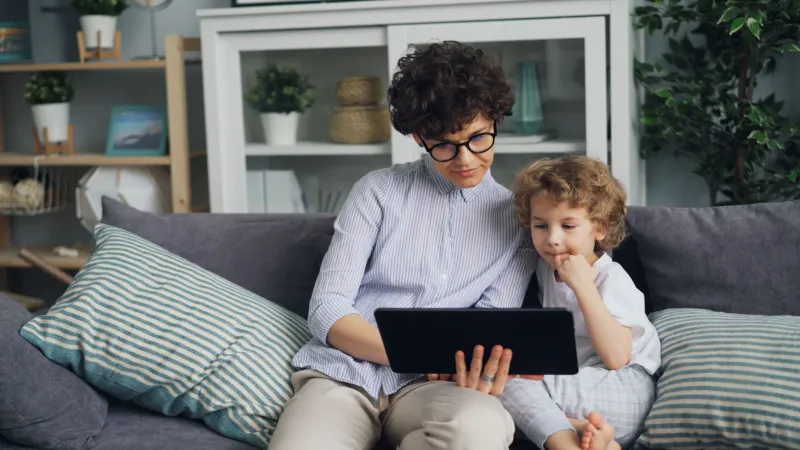
There's a particular kind of irony in watching a millennial parent confiscate an iPad from a seven-year-old while wearing a Nirvana shirt and explaining — with genuine conviction — that screens are rotting her daughter's brain. This is the same generation that begged their own parents for AOL dial-up access and counted down the days to their first flip phone. The generation that believed, with almost religious intensity, that technology was the good guy.
Something changed. And it didn't happen all at once.
The Utopia That Wasn't
If you came of age in the '90s or early 2000s, the future was basically a Marvel movie — bright, loud, and full of things that would make your life easier. The internet was going to democratize information. Social media was going to connect the world. Smartphones were going to put the sum of human knowledge in your pocket. The pitch was irresistible, and millennials bought it wholesale.
Decades later, the receipts are in. The internet democratized misinformation just as efficiently as knowledge. Social media connected the world and then set it on fire. The smartphone delivered the sum of human knowledge alongside an anxiety epidemic, a teen mental health crisis, and a surveillance economy that makes the NSA look like amateurs.
What's wild isn't that millennials feel burned. It's what they're doing about it.
Raising Kids in the Shadow of the Sales Pitch
Talk to millennial parents across the country and a pattern emerges — one that feels almost countercultural given where this generation started. In Portland, Oregon, a 38-year-old software engineer limits his son's screen time to thirty minutes on weekdays and describes the decision as "the most obvious thing I've ever done." In Atlanta, a millennial mom pulled her daughter out of a school that was pushing one-to-one tablet programs in third grade. "I build apps for a living," she says. "I know exactly what those things are designed to do."
That last part is key. Millennials don't distrust technology the way their grandparents might — out of unfamiliarity or fear of change. They distrust it the way an ex-employee distrusts a company they used to work for. They know the org chart. They've seen the internal memos. The skepticism is specific.
And it's filtering directly into how they parent.
The New School Rules
It's not just individual households, either. The cultural shift is showing up in institutional choices. Waldorf and Montessori schools — long associated with granola-adjacent parenting — are seeing surging enrollment from families who don't fit the traditional crunchy-parent mold. Tech workers, specifically, have been enrolling their kids in low-screen, hands-on learning environments for years now. The joke writes itself, but the trend is real and accelerating.
Public school districts in states like California and New York have started rolling back aggressive ed-tech initiatives that were gospel just five years ago. Some are banning smartphones outright during school hours — policies that would have seemed laughably regressive in 2015 but now get quiet applause from PTA meetings in places you'd expect to be tech-forward.
The message threading through all of it: the future isn't automatically better, and betting your child's development on that assumption is a risk not worth taking.
Futurism as Cautionary Tale
What's genuinely new here — and worth sitting with — is the psychological inversion happening at a cultural level. For most of the twentieth century, "the future" was aspirational shorthand. It meant progress. It meant relief from whatever was hard about the present. Science fiction, for all its dystopian threads, still generally operated from the assumption that humanity was going somewhere, and that somewhere was worth getting to.
Millennials grew up inside that story. They were the protagonists. They were going to build the apps and the platforms and the algorithms that would solve everything.
Now a significant chunk of them are telling their kids that the future is something to approach carefully, with both hands visible, like you're trying not to spook an animal. Futurism — the actual belief that tomorrow holds something better than today — has started to feel naive at best, and at worst, like a con.
That's a profound shift. And it's not just vibes — it's showing up in the stories millennials tell their kids, the books they choose, the questions they ask at back-to-school nights.
The Gen Alpha Wildcard
Here's where it gets complicated. Gen Alpha — the kids born from roughly 2010 onward — are the most technologically immersed generation in history, full stop. They're growing up with AI assistants, algorithmic content feeds, and augmented reality as baseline features of childhood. The parental guardrails millennials are trying to install are fighting upstream against a current that's stronger than anything their own parents dealt with.
And there's a real tension in what's being modeled. A kid watching her millennial dad doom-scroll Twitter while telling her to go read a book is absorbing a complicated lesson. The message isn't just "technology is dangerous." It's "technology is dangerous and irresistible and we're all kind of trapped by it" — which is arguably a more honest, if more unsettling, thing to pass on.
Some researchers and child development advocates argue that the goal shouldn't be fear, but fluency — raising kids who can navigate technology critically rather than either embracing it uncritically or avoiding it entirely. That framing feels right in theory. In practice, a lot of millennial parents aren't there yet. They're still processing their own disillusionment, and their parenting reflects it.
What Gets Lost When Tomorrow Becomes a Warning Label
There's something worth mourning in the death of tech-optimism, even for those of us who are clear-eyed about how badly Silicon Valley fumbled the bag. The belief that things could be genuinely, structurally better — not just more convenient, but more just, more connected, more human — was never stupid. It was, in many ways, beautiful. The problem was never the dream. It was who got to build it, and what they were actually optimizing for.
If millennials pass only the disillusionment to their kids without also passing the underlying hunger for a better world, that's its own kind of loss. The generation that came of age believing in the future has a responsibility not just to warn Gen Alpha about the pitfalls, but to hand them something worth building toward.
The future still exists. It's just going to require a lot more critical thinking — and a lot fewer unquestioned sales pitches — to get there in one piece.
We just report it. What they do with it is up to them.