One Job, Done Right: The Quiet Revolution of Devices That Refuse to Multitask
Somewhere between the twelfth app update that rearranged every button you'd finally memorized and the moment your smart refrigerator asked you to create an account, something snapped. Not loudly. Not all at once. But a growing number of millennials quietly started reaching for things that do less — and paying more to do it.
We're not talking about going full off-grid. This isn't the same story as ditching your smartphone for a flip phone or unplugging the router in protest. This is something more specific, more deliberate, and honestly, a little more interesting: the rise of the premium single-purpose device.
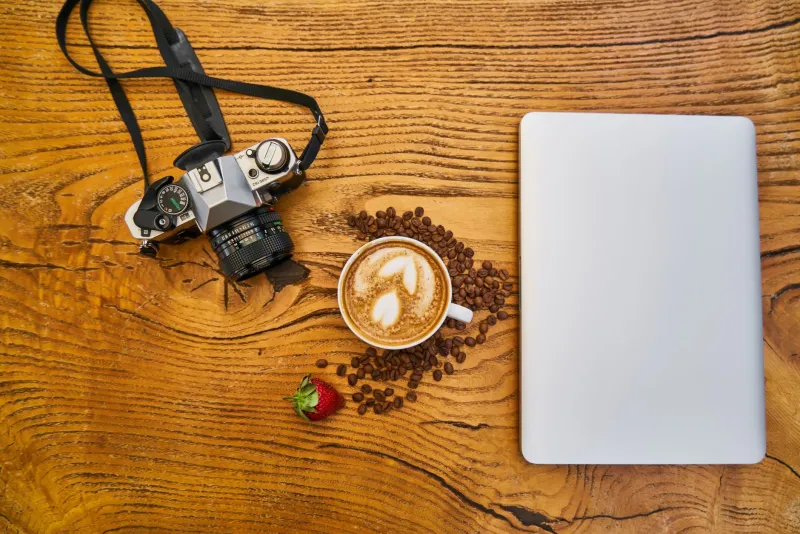
Mechanical coffee grinders with no Bluetooth. Film cameras with no screens. Kindles with no social feeds. Alarm clocks that are, bafflingly, just alarm clocks. These objects have become cultural artifacts of a particular kind of exhaustion — and the market has noticed.
Feature Creep Is Eating Your Brain
Here's the thing about modern consumer tech: it never stops adding. Every product cycle brings more modes, more integrations, more settings buried inside settings. Your blender now has a companion app. Your thermostat wants to learn your personality. Your running shoes are collecting data.
Designers have a name for what happens when products accumulate features beyond their original purpose: feature creep. And for a generation that grew up watching the internet get progressively more complicated, chaotic, and monetized, the psychological toll is real. Decision fatigue isn't just a buzzword — it's a documented cognitive phenomenon, and it turns out that owning a coffee maker with seventeen brew modes doesn't make your morning better. It just makes it louder.
Single-purpose devices short-circuit that noise entirely. You pick it up, you use it, you put it down. There's no notification waiting for you inside a hand-crank grinder. Your film camera isn't going to suggest you follow someone. The thing does its job and gets out of the way.
Simplicity as a Status Symbol
What's wild is how quickly 'doing less' became a premium proposition. A Leica camera that shoots film and nothing else can run you four figures. A Fellow Ode coffee grinder — a device whose entire personality is grinding beans consistently — retails around $300. The reMarkable tablet, which is essentially a notepad that refuses to install Instagram, costs more than a budget laptop.
These aren't cheap products. That's kind of the point.
In a marketplace where the default is more — more features, more connectivity, more data harvesting dressed up as convenience — restraint has become a design philosophy worth paying for. Brands that commit to doing one thing exceptionally well are positioning simplicity as a form of craftsmanship. And American consumers, particularly those in the 30-to-45 demographic, are buying it.
It maps onto a broader pattern we've seen across culture. The same generation that made artisanal bread and vinyl records financially viable is now applying that logic to technology. If you can taste the care in a hand-rolled pasta, maybe you can feel it in a device that was engineered to do exactly one thing without compromise.
The Aesthetic Argument
There's also just the way these things look. Single-purpose devices tend to be beautiful in a way that multi-function gadgets rarely manage. When a product isn't trying to do everything, its designers can obsess over the one interaction it's built around. The weight of a mechanical grinder. The shutter sound on a film camera. The matte, paperlike screen of a dedicated e-reader.
This isn't accidental. Companies like Teenage Engineering, reMarkable, and Fujifilm have built entire brand identities around the idea that constraint produces elegance. Their products feel intentional in a way that a Swiss Army knife never quite does — because they're not trying to be everything. They're trying to be one thing, perfectly.
And in an era of algorithmic sameness, where every app interface is starting to look like every other app interface, objects with a distinct physical identity feel genuinely countercultural. Pulling out a Fujifilm X100 at a concert reads differently than pulling out your iPhone. It signals something — a choice, an aesthetic commitment, maybe even a small act of resistance.
The Anti-Bloatware Economy
Software has a bloatware problem that hardware is increasingly being asked to solve. When your phone's photo app updates itself into something unrecognizable, a film camera starts looking like stability. When your Kindle app on your tablet keeps suggesting podcasts and shopping deals, a standalone e-reader starts looking like sanctuary.
Brands are reading this correctly. Amazon has kept the Kindle relatively pure — yes, it has a store, but it's not trying to be your social media platform. Remarkable has made a product that literally cannot browse the internet, and markets that limitation as a feature. Moleskine sells paper notebooks in 2025 and somehow makes it feel futuristic.
The anti-bloatware economy is real, and it's growing. Consumer research consistently shows that product satisfaction often inversely correlates with feature quantity past a certain threshold. More stuff to learn, more stuff to break, more stuff demanding your attention. The sweet spot — the thing people actually love — tends to be the product that does what it promises and nothing more.
What This Says About Where We're Headed
Zero Century exists at this exact intersection: a world accelerating into more complexity, more integration, more AI layered on top of AI — and a population that keeps finding new ways to pump the brakes. The single-purpose device trend isn't anti-technology. It's a recalibration of what technology is supposed to be for.
The most interesting version of the future isn't one where every object is smart. It's one where people get to decide which objects deserve a place in their cognitive space — and which ones should just do their job quietly and get out of the way.
Your blender doesn't need a personality. Your alarm clock doesn't need to know your location. And somewhere, in a Brooklyn apartment or a Chicago condo or a Portland kitchen, a millennial is hand-grinding their coffee beans with a $280 device that cannot connect to Wi-Fi, and they have never felt more at peace.
That's not nostalgia. That's a design philosophy. And it might be the most radical consumer statement of the decade.