Dead Format, Living Archive: The Millennials Who Chose Ownership Over Infinite Scroll
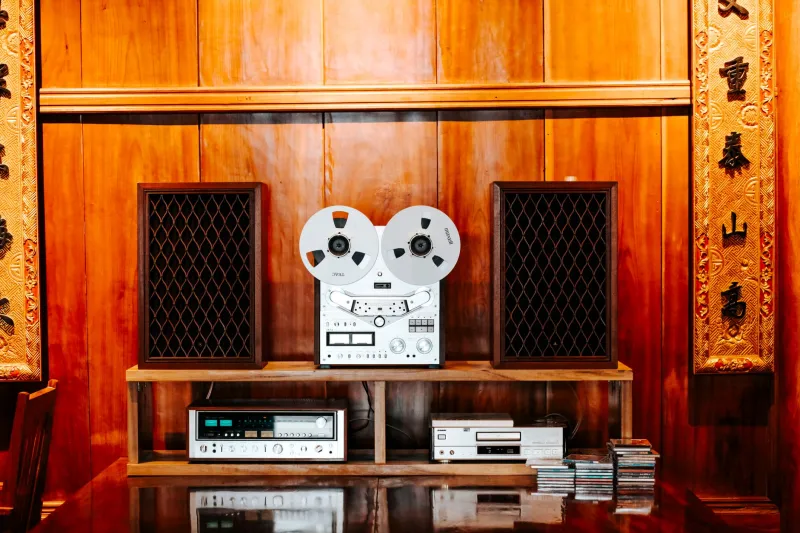
Somewhere in a Denver apartment, a 34-year-old graphic designer named Marcus has a problem most of his coworkers would call embarrassing. He owns over 400 DVDs, a functioning VCR he picked up at a Goodwill for eleven dollars, and a shelf of VHS tapes that includes both the theatrical and extended cuts of every Peter Jackson film he could track down. His streaming subscriptions? Down to one. Barely used.
"I got tired of renting my own taste," he says. "Every time a platform shuffled its library, something I loved just disappeared. It happened enough times that I stopped trusting the whole thing."
Marcus isn't alone. Across the country, a quiet but stubborn movement is taking shape in basements, thrift stores, and niche online marketplaces. Millennials — the generation that supposedly killed physical media by embracing Netflix in the first place — are now buying it back. The VCR is having a moment. So is the DVD. And the reasons go deeper than any simple nostalgia trip.
The Platform Graveyard Nobody Talks About
Here's something the streaming industry doesn't love to advertise: content disappears constantly. Not because it gets deleted from the internet, but because licensing deals expire, platforms restructure, studios get acquired, and the economics of keeping a title available shift overnight. A film you watched three times on one service can vanish without notice, sometimes never to surface on any platform again.
For casual viewers, that's mildly annoying. For people who actually care about what they watch — who rewatch things, who build relationships with specific films and shows the way previous generations built relationships with albums — it's a slow-motion crisis.
The data backs up the anxiety. Research from various media tracking organizations has consistently shown that streaming catalogs fluctuate dramatically year over year. Disney+ has pulled titles. HBO Max famously removed dozens of original productions in 2023 during a cost-cutting spiral that left creators furious and subscribers confused. Peacock, Paramount+, and Apple TV+ have all quietly shuffled content in and out of availability with minimal fanfare.
Physical media doesn't do that. A DVD you bought in 2004 plays the same in 2025. No subscription required. No algorithm deciding whether it's still worth hosting.
Ownership as a Political Act
There's a philosophical dimension to this movement that its participants are surprisingly articulate about. When you own a physical copy of something, you are not a subscriber. You are not a user. You are not a data point being fed into a recommendation engine. You own a thing. That distinction, increasingly rare in the digital economy, carries real weight.
"We've been conditioned to think access is the same as ownership," says Priya, a 31-year-old teacher in Chicago who started rebuilding her DVD collection after her streaming service removed a documentary series she'd been halfway through. "But it's not. Access can be revoked. Ownership can't. At least not legally."
This framing — physical media as a form of consumer autonomy — echoes the broader millennial reckoning with platform dependency. The same generation that grew up watching Napster get sued into oblivion, that watched social networks commodify friendship, that watched gig economy apps reclassify labor to avoid benefits, is now applying the same skepticism to how they consume entertainment. The VCR, in this context, isn't a relic. It's a hedge.
The Thrift Store Gold Rush
If you've visited a Goodwill, a Salvation Army, or any secondhand shop in the past two years, you've probably noticed the DVD section has gotten more picked-over. Prices that used to sit at a dollar a disc are creeping up. Specific titles — cult classics, foreign films, out-of-print documentaries — are now commanding real money on eBay and Discogs.
VHS tapes occupy their own weird corner of this economy. For most titles, they're worthless. But for films that were never properly transferred to DVD or digital, or that exist in different cuts only on tape, original VHS copies have become collector's items. Horror fans, in particular, have driven demand for certain pre-cert tapes to genuinely surprising price points.
The community infrastructure around physical media has also quietly matured. Subreddits dedicated to DVD and Blu-ray collecting have tens of thousands of active members. YouTube channels devoted to physical media advocacy — arguing for its preservation, reviewing releases, hunting rarities — pull respectable view counts. The Criterion Collection, long the prestige tier of physical media, has reported consistent sales growth even as streaming has expanded.
What the Algorithm Can't Give You
Ask anyone deep in the physical media revival what they get from it that streaming doesn't provide, and they'll usually land on a few consistent answers.
Discovery without surveillance. When you browse a bin of used DVDs, nothing is being tracked. No engagement metric is being updated. No behavioral profile is being refined. You're just a person looking at cases, reading back-of-box descriptions, making choices based on nothing but your own curiosity. That experience, mundane as it sounds, has become genuinely rare.
Finitude as a feature. Streaming's infinite library sounds like a gift until you've spent forty-five minutes scrolling and watched nothing. Physical collections are finite. When you own three hundred movies, you choose from three hundred movies. The constraint, counterintuitively, makes choosing easier and watching more intentional.
The object itself. There's something about holding a physical case, reading liner notes, seeing the disc, that creates a different relationship with the content. It's the same argument vinyl enthusiasts have been making for decades, and it applies here too. The medium shapes the experience.
The Future Is Already Backing Up
None of this is to say streaming is going away. It's not. The convenience is real, the catalog (when it's stable) is genuinely impressive, and most people are never going to rebuild a physical library. That's fine.
But the physical media revival isn't really about competing with streaming. It's about not being entirely dependent on it. It's about having something that belongs to you regardless of what any platform decides next quarter. In an era where digital goods can be revoked, accounts can be banned, and entire services can fold overnight, a shelf of discs starts to look less like a throwback and more like a reasonable precaution.
Marcus in Denver puts it simply: "I've watched streaming services come and go. I've had libraries wiped. I've had recommendations get so bad they felt like the algorithm was insulting me. My DVDs have never done any of that."
The future, it turns out, might have room for the past after all. Not as nostalgia. As infrastructure.